Custom Automated Gates: Convenience, Security, and Style
If you want to improve the security, convenience, and look of your property, custom automated gates are an excellent choice. Whether for a home,...

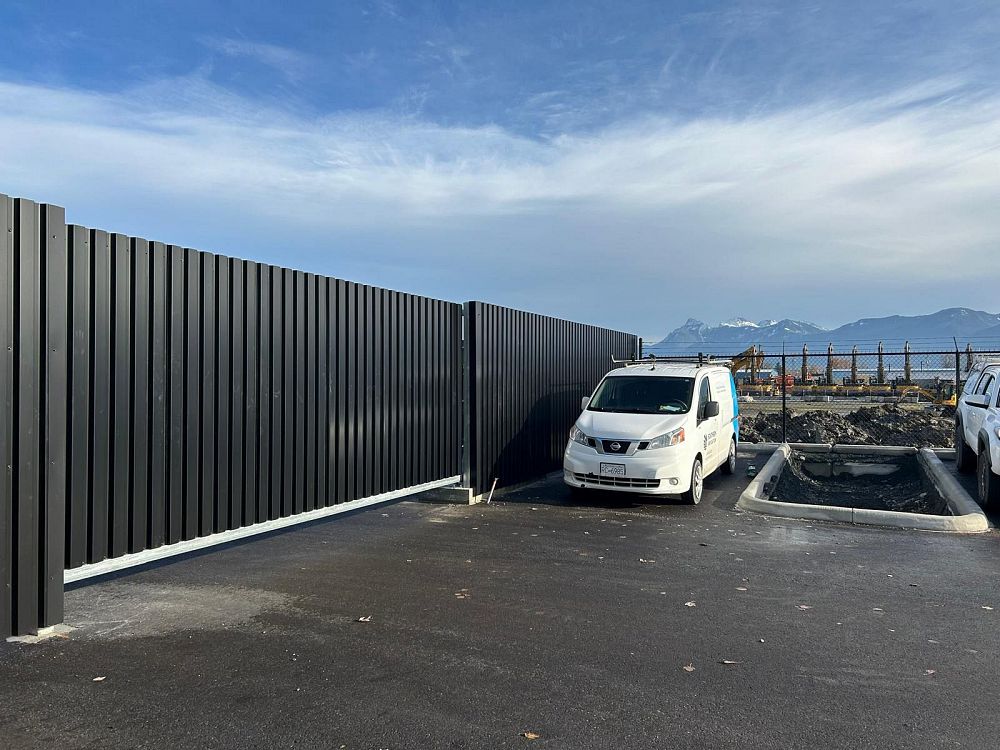
Choosing between a cantilever gate and a swing gate for your driveway is less about which style is “trending” and more about how your property is laid out. In the Fraser Valley—where gravel lanes, wet winters, and freeze–thaw cycles are common—the right answer is often the one that fits your slope, clearance, and daily traffic. This guide walks through how installers think about the decision and what to ask before you commit.
If you are comparing options for an automated driveway gate in Chilliwack or elsewhere in the region, start with a site conversation, not a catalogue photo.
Social feeds and supplier brochures often highlight one gate style or another. On the ground, your driveway depth, the line of your fence, and how vehicles approach the entrance matter far more. A gate that works beautifully on a flat, paved urban lot may be the wrong tool on a sloped acreage approach or a long gravel run.
Experienced crews typically review:
In BC’s Lower Mainland and Fraser Valley, wet seasons and freeze–thaw can shift gravel and leave soft spots. Rural pockets often stay on gravel longer than urban lots. Those realities favour designs that tolerate uneven ground and seasonal mess—reason enough to compare types carefully.
A cantilever gate slides parallel to the fence and does not need a ground track across the driveway opening. That single fact drives a lot of decisions in the Fraser Valley.
Cantilever systems need clear length beside the opening—often roughly double the opening width, depending on design—so the gate can stack off to one side. If your property line, trees, or buildings crowd the fence run, a cantilever may not fit. Where that side space exists, you avoid the inward or outward swing arc that a hinged gate needs.
Without a ground track, there is nothing for stones or ice to pack into across the drive. In gravel driveways and laneways where material migrates after storms, that can mean fewer hang-ups day to day. It does not make cantilever “always better”—it makes it worth a lookwhen surface conditions are rough or variable.
Quality cantilever hardware often uses sealed bearings and robust rollers so the gate tracks smoothly over time. Combined with a properly sized operator, that supports predictable motion—important when you automate. Your installer should match operator capacity to gate weight, wind exposure, and how often you use it.
Swing gates hinge from one or two posts and rotate through an arc—either inward toward the property or outward, where bylaws and safety allow. They can be simpler on paper when you already have a wide, flat approach.
You need enough depth and side clearance so the gate clears vehicles, pedestrians, and fixed objects through the full arc. On tight lots, a single swing leaf or a bi-fold design might still work; on others, there simply is not room. Measure twice: the arc is easy to underestimate when you picture the gate “just” opening.
Steep grades can complicate swing gates because the leaf moves through three dimensions relative to the drive. Posts and hinges must be set so the gate does not drag or bind. Sometimes swing is still the right answer; sometimes a sliding or cantilever layout fits the terrain better. This is if/then logic, not a single rule.
Use this as a conversation starter with your installer—not a substitute for a site visit.
| Factor | Lean toward cantilever when… | Lean toward swing when… |
|---|---|---|
| Slope / grade | You have straight run along the fence and want to avoid a large swing path on a grade | The approach is relatively flat and you have depth for the swing arc |
| Driveway depth | Depth is limited but side run is available | You have generous depth and clearance for inward swing |
| Surface (gravel, debris, snow) | Gravel or debris in the drive path is ongoing; you want to avoid a floor track | Surface is stable and you can keep the swing path clear |
| Debris / snow | You want the gate path mostly above grade along the fence | You can maintain the arc zone seasonally |
| Aesthetic preference | You prefer a sliding look along the fence line | You prefer traditional hinged gates and have room |
Bring these topics to your quote meeting:
Plan installation with a qualified installer; gate operator manuals and local expectations are not a DIY weekend project for most homeowners.
A&G Fencing manufactures swing and cantilever gates in-house and delivers turnkey work including conduit, electrical, and automation—so your gate, power, and access plan stay coordinated.
Is a cantilever gate better than a swing gate in BC?
Neither is universally “better.” Cantilever often suits gravel and debris-heavy drives when you have enough side run; swing can be ideal on flat sites with room for the arc. Your property dictates the fit.
Do cantilever gates work in snow?
They can perform well because the moving path is typically along the fence rather than through deep buildup on the drive—but heavy snow still needs clearing like any entrance. Ask your installer about local experience.
How much space does a cantilever gate need beside the driveway?
Often on the order of the opening width again (sometimes more), depending on design. Exact requirements are site-specific—get a measured plan.
Will a swing gate work on a sloped driveway?
Sometimes. Shallow, consistent grades are easier; steep or uneven slopes may point toward sliding or cantilever layouts. Professional measurement decides.
What should I ask about automation either way?
Operator sizing, wind load on panels, safety devices (including photo eyes), and how power and low-voltage wiring reach the operator. Align those answers before you finalize gate type.
This topic is part of our Automated Gates in the Fraser Valley: Planning Guide & Resources hub—start there for an overview, then explore the other articles on access control, power and paving, strata, farm gates, and safety.
Ready to talk installation? See custom gates and automation or contact A&G Fencing.
If you want to improve the security, convenience, and look of your property, custom automated gates are an excellent choice. Whether for a home,...
Are you preparing to build and install a fence this year? There is much to know when it comes to putting the best techniques into practice to...
Ensuring you have a properly fenced yard is paramount, particularly when you have animals and agriculture to protect. The last thing you want is...
Fences serve a variety of purposes, one of the most important being security and privacy. There are various types of fences that serve the...
Download our comprehensive eBook to find exactly what you're looking for.
Affiliations


-(1).png "CFIA")
Accepted Payments